






Song Analysis Worksheet

ACTING / SONG PREPARATION

SONG ANALYSIS
WORKSHEET

You know the notes. Now make every thought, action, and musical turn tell the story.

Build a repeatable preparation process for auditions and performances. Explore the guide and examples, fill in your own analysis, then print or save your work as a PDF.

A practical starting point for beginner and intermediate singers.
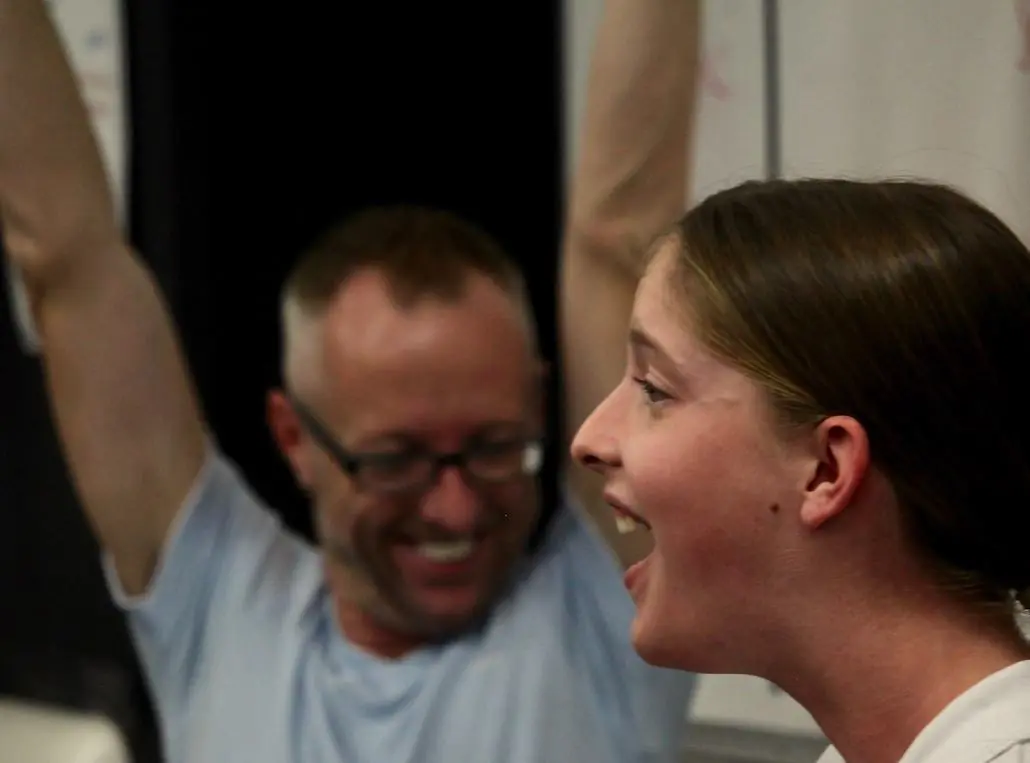
David Jayden Anthony celebrating with a student during a singing lesson

TECHNIQUE IN SERVICE OF THE STORY

THE SHIFT

CLARIFY THE STORY.
PLAY THE ACTION.
LET THE MUSIC TURN.

Start with who you are singing to and what you need. Use the score to test and refine the choices you make.

YOUR SONG. YOUR CHOICES.

Work through the fields at your own pace. Leave anything that does not apply blank. No email address or submission is needed.

Your answers stay in this open page. Print or save a PDF before leaving; reloading clears your work.

Song & Lyric Analysis Worksheet

Song Details

Lyric Breakdown

Story Essentials

Section Purpose

How does each part advance the story? Leave sections that do not apply blank.

Character & Relationship

Acting Choices

Musical Storytelling

Performance Layer

Audition Cut

Beat Map

One playable action per beat. Each group below is one row of your beat map; it stacks comfortably on small screens.

Beat 1

Beat 2

Beat 3

Beat 4

Quick Workflow

Clarify circumstances and objective. Beat the lyric and title each beat with an action. Map actions to musical turns. Release body and voice; add one functional gesture per beat. Listen and respond. Film a pass: does the story read on mute and with sound?

Your answers stay in this open page. Print or save a PDF before leaving; reloading clears your work.

MAKE THE WORKSHEET WORK FOR YOU.

How to Use the Song & Lyric Analysis Worksheet (Step-by-Step Guide)

How to Use the Song & Lyric Analysis Worksheet: A Detailed Guide

This guide explains each field on the worksheet so you can build a repeatable preparation flow for auditions and performances.

Song Metadata

Song Title / Show / Album / Standalone

Identify the exact source so you can research context, collaborators, and known cuts. If standalone, define your own story frame.

Composer / Lyricist / Year

Credit correctly. Year matters for style expectations (Golden Age vs. Contemporary) and informs vowel strategy and vibrato choices.

Voice Type, Range, Key

Confirm printed key and your chosen key. Note written range and tessitura. If the tessitura sits high, adjust breath strategy early.

Tempo / Style

Write metronome marking and groove family (swing, 12/8, pop ballad, funk). Style determines consonant energy and phrasing length.

Keywords (10 mood + style tags)

Pick tags a stranger would use after hearing your cut (e.g., yearning, defiant, comic, folk-rock). Reuse them in your audition blurb and social clips for brand consistency.

Lyric Breakdown

Write the lyrics with beat marks

Print the lyric. Insert vertical bars where tactics shift. One playable verb per beat.

Unfamiliar words or phrases

Look up meaning and pronunciation. Note dialect variants if needed.

Severity / Scale words

Circle words that raise stakes (never, always, forever, ruin). Use them to escalate action.

Repetition & Contrast

Repetition needs new intention or color. Contrast marks turns; align with harmonic or rhythmic change when possible.

Story Essentials

Song in four words

Compress the spine. If you can’t, you haven’t found the turn.

Climax point

Mark the exact syllable where stakes peak. Manage breath so you arrive free and supported.

Section purpose (what changes)

  • Verse 1: Establish need and problem.
  • Pre-Chorus: Pressure builds; decision forms.
  • Chorus: Declare action or belief.
  • Verse 2: Raise stakes or add new tactic.
  • Bridge: Break pattern; reveal or risk.
  • Final Chorus/Tag: Consequence and button.

Situation (where/when/why now)

Write a one-sentence playable circumstance. Keep it concrete and present.

Who are you singing to?

Name the partner and the power dynamic. If to the audience, define what you need them to do.

Character & Relationship

Fill concrete facts: age, gender, locale/dialect, time period, economic background, education/experience. Then define the relationship focus for this moment. Do not invent backstory you can’t play.

Acting Choices

Objective

What must change in the partner now? Use active phrasing: “get X to…”

Obstacle

What stops you? Name the partner’s resistance or your inner block.

Tactics (playable verbs)

Choose verbs the audience can see: disarm, provoke, bargain, reassure. One verb per beat.

Trigger / Moment Before

The event that makes singing unavoidable. State it simply so you can physicalize it at the top.

Musical Storytelling

Before hearing the music

State what the audience should understand if the sound were muted. Then confirm the music delivers it.

Musical devices to track

  • Harmony: tonic vs. predominant vs. dominant pressure.
  • Rhythm: groove shift, hemiola, rubato.
  • Texture: accompaniment density, pedal tones, countermelody.
  • Form: pickups, buttons, tags, vamp lengths.

Align music and action

Place verb changes on musical turns when possible. If tactic changes but the music doesn’t, verify the turn is earned.

Performance Layer

Physical choices per beat

One functional gesture per beat, anchored in need, not decoration.

Vocal colors

Map mix choices, vowel modifications, and consonant energy to stakes. See Belting, Placement, Vibrato, and Breathing / Support.

Breath plan

Mark inhales and releases. Protect the climax by budgeting air and avoiding late gasps.

Imaginative world

Define space, eyelines, and imaginary objects so the story reads even on mute.

Audition Cut

16/32-bar cut

Follow the audition’s stated bar count or time limit; duration varies with tempo and edition. Include a clear beginning, a turn, and a clean button.

Alternate tactics (for redirects)

List 2–3 verbs you can swap instantly without changing notes. Example: reassure → challenge → seduce.

Summary (1–2 sentences)

State what changes across the cut. This guides your slate and the pianist.

One takeaway word

Aim your performance at one final word (e.g., resolve). It keeps focus under pressure.

Beat Map (How to Fill It)

Each row = one playable action aligned to a musical cue.

Beat 1

  • Lyric / Text: “First line…”
  • Action (verb): Disarm
  • Obstacle / Partner: Partner avoids eye contact
  • Gesture / Object: Lower shoulders
  • Musical cue: Vamp ends → downbeat
  • Breath / Voice plan: Quick sip before bar 3
  • Evidence of change: Partner turns toward you

Beat 2

  • Lyric / Text: “Second line…”
  • Action (verb): Press
  • Obstacle / Partner: They deflect with humor
  • Gesture / Object: Step closer
  • Musical cue: Pre-chorus hemiola
  • Breath / Voice plan: Open ribs early
  • Evidence of change: They stop joking

Quick Workflow

  1. Clarify circumstances and objective.
  2. Beat the lyric; title each beat with a verb.
  3. Map actions to harmonic and rhythmic turns.
  4. Add one functional gesture per beat.
  5. Run a listening pass; adjust tactics to true stimuli.
  6. Film; the story should read on mute and with sound.

Next Steps

  • Choose repertoire: Repertoire Tools
  • Warm up intentionally: Vocal Warmups
  • Deepen technique: Breathing, Placement, Belting, Vibrato

These are sample acting interpretations, not the only playable choices. Confirm musical details, dialogue, circumstances, and the moment before against your licensed score and script.

Part 1: Song Basics

  • Song Title: Dead Mom
  • Show, CD, or Standalone Song: Beetlejuice the Musical
  • Composer / Lyricist: Eddie Perfect
  • Year Published / First Performed: 2018 pre-Broadway premiere; Broadway opened in 2019
  • Could this song be done by the opposite gender? Yes, though it is written for Lydia, it could be adapted for any grieving character seeking guidance from a parent.
  • Range of this piece: Check the range and tessitura in your licensed score and chosen key; the role calls for a strong contemporary mix/belt.
  • Key: Confirm the key and any tonal changes in your edition.
  • Tempo marking: Moderato with a pop-rock drive
  • 10 keywords (musical feel + emotional vibe): urgent, pleading, angsty, raw, confessional, rebellious, grief-stricken, driving, vulnerable, explosive
  • Voice type: Mezzo/Belter

Part 2: Lyric Analysis

  1. Write the lyrics & mark beats: Each “Dead mom / dead mom” refrain is its own beat; verses are sections of plea; the bridge is escalation; the final chorus is climax.
  2. Unfamiliar phrases: None in modern context (language is simple and contemporary).
  3. Severity (time/amount/size words): “Always,” “never,” “again,” “little,” “everything,” “forever.”
  4. Repetition: The phrase “Dead Mom” repeats obsessively, showing fixation. Transition words like “but,” “if,” “so” mark turns.
  5. Short summary (4 words): “Grief becomes desperate plea.”
  6. Defining sections:
    • Opening: childlike call for help.
    • Verse: explains frustration with dad and need for guidance.
    • Pre-chorus: urgency and bargaining.
    • Chorus: direct plea to mother.
    • Bridge: rebellious escalation (“strike me down, take control”).
    • Final chorus: explosive demand, emotional climax.
  7. Character details: Lydia Deetz, teenager (about 15–16). Female. Gothic, sharp-witted. Use the time and place specified in your production. Middle-class but alienated. High school level education.

Part 3: Before You Hear the Music

  1. Text as prose: Even without melody, it reads as a confession-letter to a dead parent, swinging between conversational sarcasm and desperate begging. You’d expect a pop-rock ballad with a strong build, which is exactly what happens.

Part 4: Situation

  1. Describe a situation: Lydia is trying to communicate with her deceased mother, feeling ignored and unsupported by her father, and desperate for guidance. The “audience” of the song is her dead mom—an absent but vividly imagined partner.

Part 5: Objective

  1. Objective: “I want my mom to answer me and guide me because I feel abandoned and don’t trust my dad.”

Part 6: Trigger Question

  1. Trigger / Moment before: Lydia has just witnessed her father move on too quickly after her mom’s death, brushing off Lydia’s pain. Her frustration explodes into this plea.

Expanded Performance Notes

  • Climax: The bridge (“Strike me down, take control”) → last chorus, at the climactic high phrase in your chosen key.
  • Tactics: To beg, to provoke, to demand, to question, to accuse, to plead.
  • Obstacle: Her mother is dead and cannot answer. Her father won’t listen.
  • Musical cues: Modulation and vocal leaps match spikes in anger and desperation.
  • Physical actions: Looking upward (to her mom), pacing, gesturing outward in frustration, collapsing inward at moments of vulnerability.
  • Breath plan: Save deep support for high belt sections; breaths align with thought shifts.
  • Vocal colors: Mix on verses (intimate/confessional), open belt on chorus (urgent/demanding), brighter intensity in the bridge, without forcing vocal roughness.

These are sample acting interpretations, not the only playable choices. Confirm musical details, dialogue, circumstances, and the moment before against your licensed score and script.

Part 1: Song Basics

  • Song Title: Seventeen
  • Show, CD, or Standalone Song: Heathers: The Musical
  • Composer / Lyricist: Laurence O’Keefe & Kevin Murphy
  • Year Published / First Performed: 2010s (Off-Broadway 2014; West End 2018)
  • Could this song be done by the opposite gender? Yes — though rooted in Veronica and J.D.’s story, it can be adapted as a universal teenage plea for normalcy.
  • Range of this piece:
    • Veronica: Check the written range and chosen key; contemporary mix/belt.
    • J.D.: Check the written range and chosen key; baritenor mix/belt.
  • Key: Confirm the key and tonal changes in your edition; a warm pop-rock ballad feel.
  • Tempo marking: Moderato / gentle rock ballad, building to emotional swell.
  • 10 keywords (musical feel + emotional vibe): yearning, intimate, tender, nostalgic, vulnerable, hopeful, longing, youthful, emotional, bittersweet.
  • Voice type: Duet — Mezzo/soprano mix + Baritenor.

Part 2: Lyric Analysis

  1. Lyrics (beats/sections):
    • Veronica’s verse: confession and longing.
    • J.D.’s entrance: fragile vulnerability.
    • Chorus (“Let’s be seventeen”): central plea for normalcy.
    • Bridge: escalation, envisioning what life could be like.
    • Final chorus: joined voices, unified desire, climax.
  2. Unfamiliar phrases: None; all contemporary.
  3. Severity words: “Always,” “just,” “never,” “seventeen,” “normal.”
  4. Repetition: The phrase “Seventeen” repeats to emphasize the longing for innocence and simplicity; “Let’s be normal” is a refrain that contrasts the chaos of the show.
  5. Short summary (4 words): “Longing for normal life.”
  6. Defining sections:
    • Verse: expressing emotional exhaustion.
    • Chorus: desperate desire to rewind and simplify.
    • Bridge: fantasy of ordinary happiness.
    • Final chorus: climax — their united cry.
  7. Character details:
    • Veronica Sawyer, 17, witty and intelligent, caught between morality and rebellion. Middle-class, suburban high schooler.
    • J.D. (Jason Dean), 17, brooding outsider, unstable but vulnerable, abusive household background.

Part 3: Before You Hear the Music

  1. Text as prose: Reads like a heartfelt confession. Even without melody, it suggests a ballad — tender, emotional, aching, with a slow build. The repeated title word “Seventeen” clearly signals nostalgia and yearning.

Part 4: Situation

  1. Describe a situation: After chaos and violence, Veronica wants to escape the destruction and just “be seventeen.” She pleads with J.D. to return to innocence. J.D., though broken, echoes the desire. It’s a moment of reprieve in a dark narrative.

Part 5: Objective

  1. Objective:
  • Veronica: “I want J.D. to give up the madness and just live a normal teenage life with me because I crave stability and love.”
  • J.D.: “I want Veronica to believe in me and accept me because I long for connection despite my darkness.”

Part 6: Trigger Question

  1. Trigger / Moment Before: After escalating violence and moral compromise, Veronica sees a chance to step away from destruction. She asks: “Can’t we just be kids again?”

Expanded Performance Notes

  • Climax: Final chorus — both voices soaring on “Let’s be seventeen.”
  • Tactics: To plead, to persuade, to reassure, to seduce, to comfort, to beg.
  • Obstacle: J.D.’s trauma and obsession with revenge; Veronica’s fear of losing herself.
  • Musical cues: Verse (intimate piano), chorus (warm build with guitar/strings), bridge (emotional lift), final chorus (full rock ballad swell).
  • Physical actions: Sitting close, reaching out, hesitant touches, pulling away, then joining together at the climax.
  • Breath plan: Sustain long phrases in chorus; breaths align with emotional turns.
  • Vocal colors: Soft mix for intimacy; open belt for emotional peak; blend harmonies carefully in duet sections.

YOUR EXPERIENCE MATTERS

WHAT CHANGED
WHEN YOU TRIED IT?

Which question unlocked your song? Share a discovery, a sticking point, or a question from your analysis.

Before

What was happening in the phrase?

The adjustment

Which experiment did you try?

After

What improved—or still feels unclear?

This opens your email app. You’re welcome to send a short testimonial, a comment, or a question. We’ll ask your permission before quoting your feedback publicly.

David Jayden Anthony, musical theatre voice and acting coach

YOU DON’T HAVE TO FIGURE IT OUT ALONE

STILL NOT
CLICKING?
LET’S HEAR IT.

Bring your song and worksheet to your free 30-minute Zoom coaching and assessment session. We’ll test the choices together and connect your acting, voice, and musical storytelling.

In your free 30-minute Zoom session, we’ll work on your material, assess what’s getting in the way, and explore a practical next step together.

Real coaching + assessment · No obligation to book paid sessions

Quick Links
CoachingThe full hub — private, online, masterclasses Book a Free Assessment30 minutes on Zoom, no pressure Recording ServicesDemo & audition recordings The PodcastNew episodes weekly
